
Buyer Beware – New Property Law in Qld: Seller Disclosures
The New Seller’s Disclosure Regime
The landscape of property laws in Queensland is ever evolving, with recent changes bringing forth a significant shift in seller disclosure obligations. Recently the Queensland Government passed the Property Law Bill 2023, that introduces a raft of changes to property law including the much awaited ‘Seller’s Disclosure Regime’.
This means a seller in Queensland will be required to provide a ‘Seller’s Disclosure Statement’ and prescribed certificates in relation to the property they are selling to a prospective buyer before a contract of sale is signed by the prospective buyer. The buyer might be able to terminate a contract of sale any time before settlement if these documents are not provided correctly, or there is a mistake or omission that relates to a material matter, which the buyer was not aware of and had they been aware, they would not have entered into the contract.
It has been a long time coming, particularly since this requirement already exists in other states. The introduction of this new legislation into Queensland aims to enhance transparency in property transactions, empowering buyers with crucial information. While this marks a positive step towards fostering transparency in real estate transactions, it’s essential to recognise the limitations within these obligations – and for the purpose of this article, particularly the limitations around NO requirement for the Seller to make any disclosure on the structural soundness of a property nor any previous attempts at remediation.
It is not unreasonable for a Buyer to assume that a disclosure process and statement by the Seller and a Building and Pest Inspection covers all aspects and risks to them when purchasing a property. But this is simply NOT the case.
It is important for Buyers to understand the limitations of the disclosure process, and also the limitations of the Building and Pest Inspection and view these as a starting point rather than a comprehensive account of a property’s condition and take additional due diligence steps in relation to ‘structural soundness’ to mitigate their risks in their property transactions.
In this article, we offer our industry experience and commentary in relation to:-
- The devastating impact on Buyers when structural soundness issues are not disclosed;
- It’s ‘Buyer Beware’: Structural Soundness is NOT included in the Seller’s Disclosure Statement;
- No Recourse Nor Insurance Coverage If Structural Issues Found After Purchase;
- Buyer’s Problem 1: Hidden rectification works (particularly resin/polyurethane grout injection that may cause problems post-purchase) won’t be disclosed without Buyer’s additional due diligence;
- Buyer Problem 2: Understand the Limitations of Building and Pest Inspection, what the report small print says, and what the QBCC recommend;
- Savvy Buyers Solution 1: The Critical 5 Due Diligence Questions to Ask Before Entering Into a Contract;
- Savvy Buyers Solution 2: Include a Clause In Your Contract to Undertake a RPEQ Structural Engineer Report on Foundation Performance (it is inexpensive);
- Why We Use and Recommend only RPEQ Structural Engineers – questions to ask before engaging;
- The Problem with Resin / Polyurethan Grout Injection with Structural Foundation Remediation:
- We are here to help.
1
The devastating impact on Buyers when structural soundness issues are not disclosed
When structural issues or failed structural rectification works are discovered after a purchase and there has been no disclosure prior, this can be devastating financially and emotionally to a Buyer. The two most unexpected and expensive additional costs that a buyer can experience post-purchase, where they discover an issue that was not disclosed about a property, are termite damage remedy and structural soundness remedy.
These are material matters, which if the buyer was not aware of and had they been aware, they may not have entered into the contract, negotiated a reduction in price for the repair value, or asked the seller to repair prior to settlement. In this article, we are focusing on structural soundness.
We have received an incredible number of stories where buyers were not informed about the use of resin or polyurethane grout injection to remedy a foundation structural problem where these works failed completely or did not permanently fix the problem and has returned. The distress and cost of rectification has often placed a burden on the buyer that has negatively impacted them both emotionally and financially, in our opinion, has been cruel to watch.
“I came across a lady, and she just recently purchased a property. It wasn’t disclosed to her that the property had some serious structural defects, and that it had resin injection underpinning done to it. Subsequent to that, they called us out, as the resin has not worked. The devastating thing for her was she comes from Victoria, where she said she believed there’s full disclosure around these issues, but it wasn’t the case for them in Queensland where a seller did not have to disclose issues or these types of works. We got a structural engineer out to have a look at it, and it needs structural underpinning at a cost of $80,000 which is a significant cost Had they known, they perhaps may have made a different decision, and it is now putting a severe financial bind as to what they do. And from what I know, in Queensland they don’t have any recourse about that. She was disturbed that the resin did not work and that they had no knowledge what had been done to their property prior to purchasing. Foundation matters can be a $6,000 cost or, in this case an $80,000 cost because the prior works did not work, and the problem has worsened. I hear these stories from consumers all the time, and I feel it’s important there is transparency around these issues, and to inform consumers when they are looking to purchase a property, what questions to ask.”
What is this? This is resin that was injected under a house to fix a subsidence issue. During a foundation inspection, we extracted some of the material out to examine the condition it was in. Needless to say, the resin didn’t work. Sure it initially raised the house back to the required height, but over time the house subsided again.
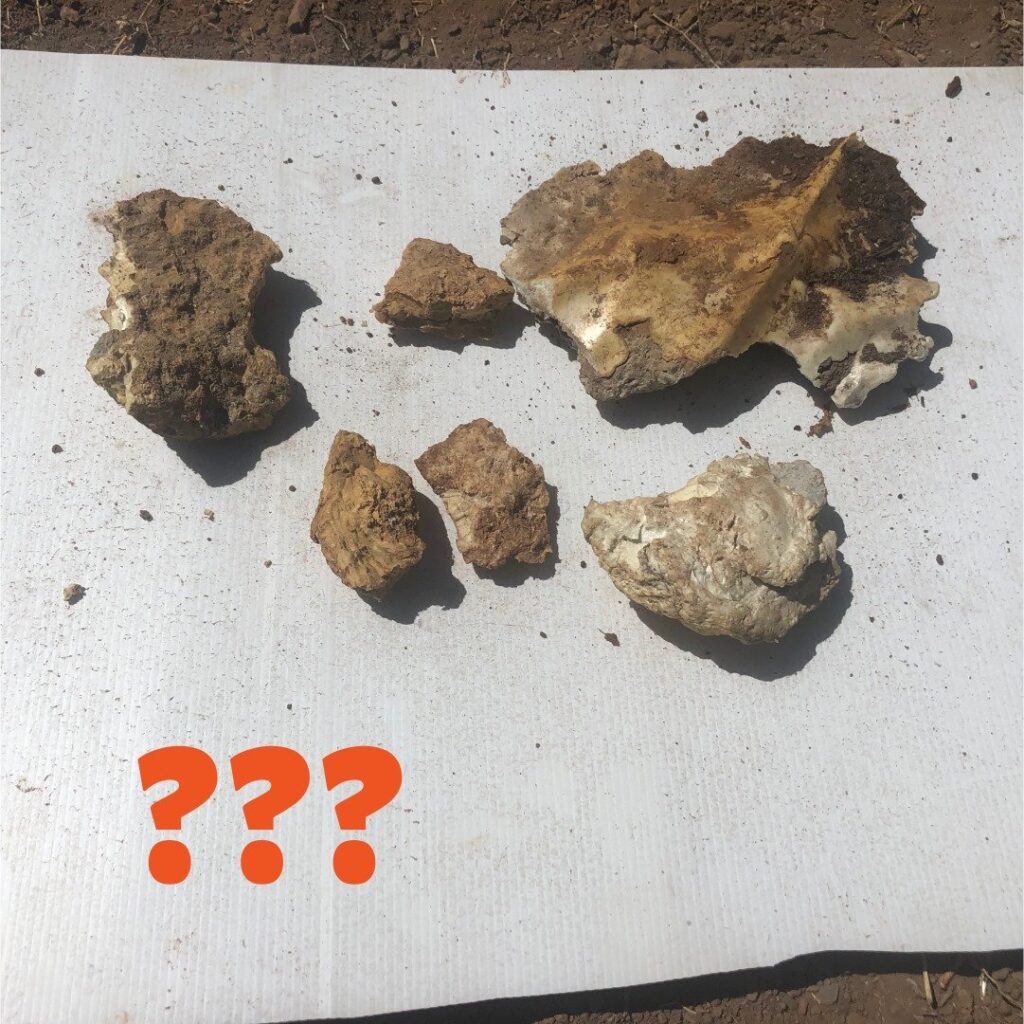
“It wasn’t disclosed to her that the property had some serious structural defects, and that it had resin injection underpinning done to it. Subsequent to that, they called us out, as the resin has not worked. The devastating thing for her was she comes from Victoria, where she said she believed there’s full disclosure around these issues, but it wasn’t the case for them in Queensland where a seller did not have to disclose issues or these types of works.”
2
It’s ‘Buyer Beware’: Structural Soundness is NOT included in the Seller’s Disclosure Statement
The draft disclosure document currently includes this critical ‘statement’ from the buyer to note the below: –
‘DRAFT Seller’s Disclosure Statement:
Warning: This statement does not include information about: (amongst other things) structural soundness of the building. You are encouraged to make your own enquiries about these matters prior to signing a contract. You may not be able to terminate the contract if these matters are discovered after you sign.
No warranties are given about the structural soundness of the buildings or improvements on the property. It is recommended that a buyer engage a licensed building inspector to inspect the building and provide a report.’
Lawyer Kayleigh Swift, Director of NB Property Law advises:
“The date the Act will commence is to be a date fixed by proclamation, meaning a date set by the Parliament in the future. Unfortunately, this date has not been set yet.”
“At this stage, unfortunately the Bill does not allow for structural disclosure. It allows for further disclosure of other information that a seller has to disclose, but it doesn’t bring it into line with those southern States. We are still behind the eight-ball there.”
“Disclosure from the seller is if they are aware of a problem Obviously, a seller has to be aware of it to disclose something, so if it is early stages and they themselves don’t know it, and two years down the track the buyer finds out about it, the buyer would have to prove the seller knew about it.
At the moment, it’s basically the case that it is buyer beware. The seller doesn’t have to disclose anything in regard to the structure of the building they are selling. Basically it’s minimal disclosure they have to give.”
“Unfortunately, with those Building and Pest Inspections that clients get done, even with them, we’ve had clients come back where things weren’t picked up by the inspection. A lot of the time Building and Pest Inspectors include quite strong indemnities in the reports so they’re not really liable for anything, so you can’t even really rely on those Building and Pest inspection reports too much any way.”
“At the moment, it’s basically the case that it is buyer beware. The seller doesn’t have to disclose anything in regard to the structure of the building they are selling. Basically it’s minimal disclosure they have to give.”
— KAYLEIGH SWIFT, LAWYER
3
No Recourse Nor Insurance Coverage If Structural Issues Found After Purchase
People may miss these crucial steps in assessing the property’s value and safety concerning structural soundness, because they are unaware of three things:-
1. the limitations of the Seller’s Disclosure Statement;
2. the limitations and small print in Building and Pest Reports, that the report is not a structural damage / soundness report;
3. If they encounter future issues with the property they purchased—such as those often seen with resin or polyurethane injection foundation repairs—they will have no recourse against the seller and no coverage from home insurance. Any costs for remediation will be their responsibility.
We explain this important information in detail below.
4
Buyers Problem 1:
Hidden rectification works (particularly resin/polyurethane grout injection that may cause problems post-purchase) won’t be disclosed without Buyer’s additional due diligence
It is widely known in the industry that some property owners attempt to hide structural issues by using a resin or polyurethane injection process and then quickly put a property on the market before ongoing problems appear. We see this regularly when called to remedy a previously attempt to repair foundation structural issues using resin or polyurethane injection. A sellers disclosure requiring a property repair of this type would create a transparent process and inform a buyer. Unfortunately that is not the case, so the buyer needs to ask additional questions.
Honesty and transparency in the process would not leave the buyer without funds, or devastated, when it is discovered. It is not that this would crash a contract necessarily if known, but rather that a buyer could factor in the cost of the ongoing maintenance required and/or permanent rectification if they choose. There are genuine reasons some sellers may not want to undertake permanent rectification works, if a move quickly is required for work, family or health reasons for example. In these instances, it is better for sellers to get a quote for a permanent fix, and present these to the buyer for their choice, letting them know the price of the property has factored in these costs. This is a honest and transparent process (like the legislation intended) and there is no surprise or unfair burden extracted from the buyer.
Adam Tolhopy, a building and pest inspector from Resicert says:
“I have seen several examples where the resin filled work has resulted in slabs being raised above the intended level and then further work being required to correct this. Others where the levels were initially good but quickly (within a matter of months) appeared to settle back below level and required further works again often at the client’s expense.”
— ADAM TOLHOPY, BUILDING & PEST INSPECTOR
Lawyer Kayleigh Swift, told us:
“We have interstate buyers all the time, and a lot of them haven’t purchased in Queensland before but have purchased in the Southern States where there are vast differences with the laws and how they operate. We take these clients through the differences compared to when purchasing in NSW and Victoria, with the main one being that the sellers do have to give disclosure before entering into contracts (unless it is a body corporate, which is really minimal). Lawyers in Queensland can’t do conveyancing in other states unless they’re registered in those States”
“We’ve had it before, in an instance where there has been a retaining wall where you could see it was almost falling over. We drafted a special condition so that the contract was subject to a structural engineer going out to assess the extent of that damage and the cost, because that doesn’t necessarily fall under the Building and Pest Inspection condition. Without this clause, the seller then could have said no, ‘we’re not allowing a structural engineer onto the property’ because they don’t have to allow those people onto the property. But because we had the condition drafted into the contract, they had to: (1) allow the engineer onto the property; and (2) yes, they could terminate the contract, reduce the purchase price, or have the seller fix the problem prior to settlement.”
“Unfortunately, at this stage, we have standard contracts we use in Queensland that are generally used. The REIQ one which is most common used around 80% of the time, and there is another one , ADL, which is basically the same terms. Currently those two Queensland contracts don’t allow for any recourse on the seller. It is a ‘buyer beware’ situation. You put the conditions in the contracts that suit you as a buyer. If structural soundness is not one of the conditions, and it isn’t something you’ve picked up under the contract prior to going unconditional, once the property settles, it’s your property and you can’t unfortunately seek any recourse against the seller for the structural issues.”
“Currently, those two Queensland contracts don’t allow for any recourse on the seller. It is a ‘buyer beware’ situation.”
— KAYLEIGH SWIFT, LAWYER
Kayleigh Swift concluded:
“With regard to resin or polyurethan works, this is not actually building and construction work, so won’t be disclosable under the code unless specific questions are asked by the buyers. If a property is affected in that way, a lot of the times a seller is not going to disclose that on good faith. A lot of sellers are greedy and all they want is extra money, so they know disclosing that is obviously going to jeopardise them getting that higher price, or potentially have that buyer walk away.
“It’s not fair, people are taken advantage of when selling properties. But for buyers, for a lay-person, they are not going to know what to look for and what to draft into a contract.”
“Unless you’ve got a honest, morally ethic seller, they don’t have to disclose that, and a lot of times they are not going to.”
If I was purchasing a property, I would be looking to have a structural engineer go through the property because buying a property is not a small investment. You’re spending a lot of money on this investment and a structural inspection is peanuts in the grand scheme of things. If things are picked up, we have the right then to terminate the contract, or negotiate on price or the seller has to repair the issues prior to settlement”.
“With regard to resin or polyurethan works, this is not actually building and construction work so won’t be disclosable under the code, unless specific questions are asked by the buyers.”
— KAYLEIGH SWIFT, LAWYER
5
Buyers Problem 2:
Understand the Limitations of Building and Pest Inspection, what the report small print says, and what the QBCC recommend
A lot of people find comfort in getting a Building and Pest Inspection Report on a property they are intending to purchase, and it does provide a lot of great information. However, there is a common misconception on what property buyers believe they are receiving with this report, and what it actually reports on. It is important to note though that the Queensland Building and Construction Commission (QBCC) advise on their ‘Before you buy and sell’ guide that:
‘QBCC: A pre-purchase building inspection is not a warranty against future defects”. “If you are worried about particular parts of the property (e.g. the roof), you should think about getting a more detailed report from the appropriate expert (e.g. plumber, engineer)’.
It is a common misconception of prospective buyers when including a clause about a Building and Pest Inspection that the ‘inspector’ will be looking at the ‘building’ and this would naturally include foundations and the tests required to identify structural issues from the foundations.
This is not the case and is something to be aware of. When you look closely at a building and pest report, you may find in the small print that they indemnify themselves, and correctly so (as they are not structural engineers) against any legal recourse with a statement similar to the below.
Building and Pest Inspection Report content:
“The report is not a structural damage report.”
“Cracking of Building Elements: Regardless of the type of crack(s) the inspector carrying out a visual inspection is unable to determine the expected consequences of the cracks. As a crack on the day can be 1mm wide but may have the potential to develop over time into structural problems for the home owner resulting in major expensive rectification work. Information required to determine the consequences of a crack:
Nature of the foundation material on which the building in resting
a) The design of the footings
b) The site landscape and topography
c) The history of the cracks
All these factors fall outside the scope of this inspection. However the information obtained from the items above are valuable in determining the expected consequences of the cracking and any remedial work.
“The report is not a structural damage report.”
— STANDARD BUILDING REPORT INCLUSION / SMALL PRINT
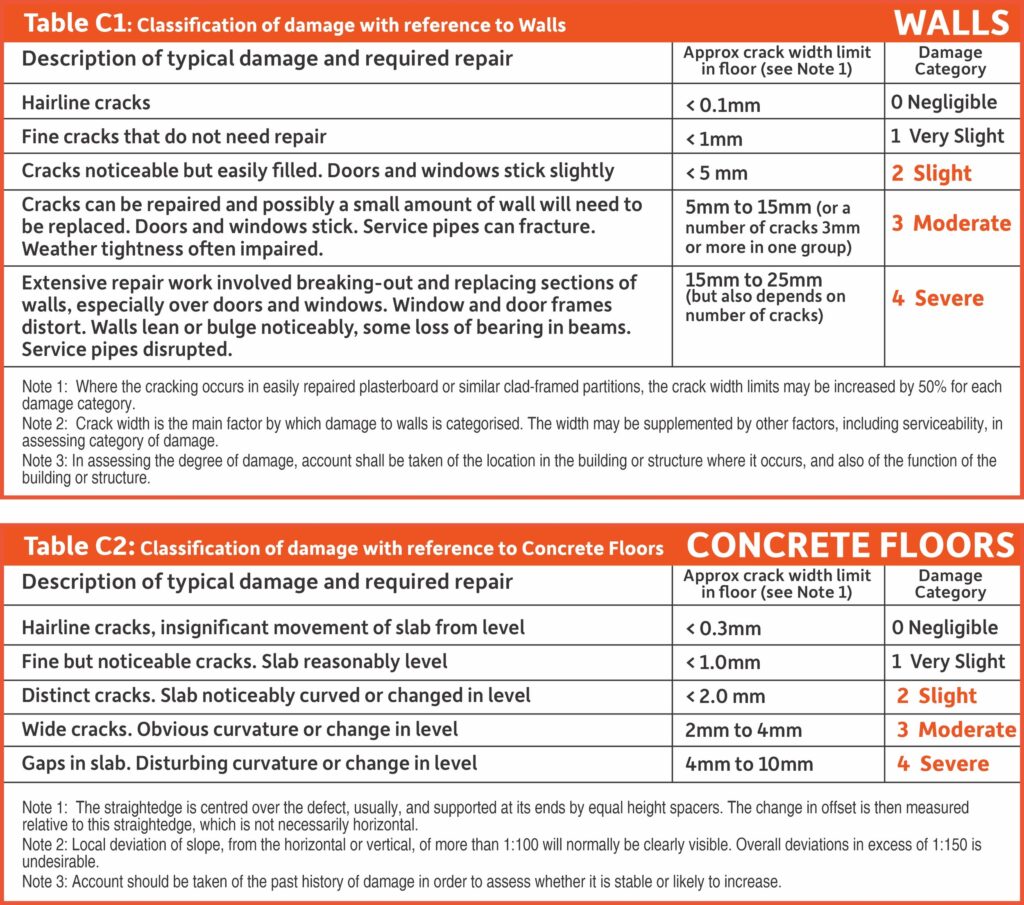
Building and Pest Inspectors are aware of, quote and include, the Australian Standards used for residential slabs and footings and the classification of damage due to foundation movements with reference to walls and concrete floors (see below). They will generally note cracks they can see in the ‘damage category’ and make note to observe cracks less than this, and recommend you engage an expert. You may see comments extracted from the Standards similar to what is shown below.
This may give prospective buyers the impression that they have covered off in this area, however that is not the case. Whilst a building inspection report may identify visual signs, as indicated above, they are not experts.
“It is therefore very important to realise that a building and pest inspection/report may not disclose structural issues, and for particular parts of a property a more detailed report from an ‘expert’, like a structural engineer, should be undertaken as recommended by the QBCC.”
— QBCC
AS2870-2011 Table 4.1. This table specifies the maximum design differential footings deflection for design of footings and rafts. Together with the visual signs, whether they’re obvious of not, if they are outside of this table, which means it exceeds the expectations for the allowable deflection in the structure, then underpinning is recommended to stabilise the structure.
Lawyer Kayleigh Swift, told us:
“In terms of liability for Building and Pest Inspectors, they do all have their own terms and conditions and I believe they fob off liability. Their terms indemnify themselves, they are not saying they are a qualified trades person or whatever. They are literally just doing an inspection and if anything comes from that they don’t take on the liability.
It is very important that you’re abreast of who has actually been appointed to do the inspection. A lot of times the seller will do the Building and Pest Inspection and have a report there to stop the buyer doing their own, saying “ you don’t have to incur the cost, we’ve got this report here ready for you, so don’t worry about it”. I always say to my clients in that case, “the sellers engaged that person, there could be some bias towards the seller as opposed to the buyers, so I always recommend our clients get their own Building and Pest Inspection in that case. You don’t know what’s been missed in that report for the sellers benefit and that constantly happens as well.
“Whilst Building Inspectors should be trained to know about these issues, and they are not necessarily saying “this is the case”, but the Building and Pest Inspector should be referring the client onto someone else telling them “it looks like this may be the case” and then ask the expert, the structural engineer to go on site, so a buyer knows prior to the contract
“The Building and Pest Inspector should be referring the client onto someone else telling them “it looks like this may be the case” and then ask the expert, the structural engineer to go on site.”
— KAYLEIGH SWIFT, LAWYER
6
Savvy Buyers Solution 1:
The Critical 5 Due Diligence Questions to Ask Before Entering Into a Contract:
You should do this now, and also after the legislation becomes effective to navigate risks and gather relevant information about a property’s structural integrity where you are looking to buy a property that has a slab on the ground, to ensure that you have a comprehensive understanding of any potential issues. This is in addition to any standard disclosure statements the seller is required to give.
Before you enter into a contract, discuss this with your lawyer or conveyancer, and in our view it would be wise to ask in writing, and receive the answers given by the sellers through the agent in writing, to the below questions. The reason we recommend this process is done in writing is it has been known that where underpinning has been done (whether resin or permanently) that buyers have been given dodgy answers and fobbed off, as shown in this instance:
“I could see the back end of the house had obvious work on it. The mortar between the bricks was new and you could see where the ground had been disturbed. I asked the real estate agent if it had been underpinned or resin injected, as I wanted to know the history of the property. The agent told me “They had no knowledge of that”. I asked if they could check with the seller for me. When I followed up the day after on the issue and they stated again “They had no knowledge of that”, but when I asked if that was what the buyer had said, they said “no, they would check”. It was obvious the real estate agent was trying to dodge the question about structural issues, but also trying to mislead me on the answer they were giving. Then I rang again two days after to see if they had a seller’s answer, and they would not take my call. It shocked me but whilst I don’t actually know the truth and history about the property, it certainly appeared a sticky question for the agent and one they were trying to dodge around, and in the end, didn’t want to answer me truthfully.”
“It was obvious the real estate agent was trying to dodge the question about structural issues, but also trying to mislead me on the answer they were giving”
— SUE MAZUR
The Suggested 5 Pre-Contract Due Diligence Questions for Buyers to Ask:
By asking these suggested 5 questions, in our experience and view, buyers can gain insights into the property’s history and identify any red flags that may warrant further investigation in assessing the structural integrity of a property.
1. Has the property ever experienced any foundation problems or undergone repairs related to its foundation, including screw pile underpinning, concrete pier underpinning or any resin or polyurethane injection work? If yes, can you please provide copies of the works contract, warranties, and/or maintenance recommendations?
Tip: This will disclose to you any works on the property, and if yes, ensure a correct handover of any information, warranties or maintenance programs recommended.
2. Have there been any reports or assessments conducted on the property’s foundations or building inspection reports undertaken? If so, could you provide copies of those reports or quotes?
Tip: Not all cracks or movement require works, as the key to correctly assessing a property is whether the movement is active. A building inspection report may visually identify cracks, however only an expert RPEQ structural engineer that visits the site can correctly assess not only the effects of movement, the cause, whether the movement is active, the correct remedy and scope of works. Then, if works are required, you have the correct facts to accurately assess the property and its safety and value. If the movement is old or not active and no works are required, you can then have peace of mind.
3. Have there been any QBCC claims, insurance claims or disputes related to the property’s foundations in the past?
Tip: This will give you further information on the history of the property and any prior problems, not only at the build stage, but afterwards.
4. Has a plumber previously been engaged to repair broken pipes or drainage?
Tip: How is the drainage around the property? Excessive moisture around the dwelling and not having the correct falls can weaken the foundation over time, leading to structural issues that may require underpinning to reinforce the foundation’s stability.
5. How old is the property, what type of soil is it built on, and have any soil tests been conducted on the property?
Tip: Older homes, especially those built on expansive clay soils or in areas prone to soil movement as these are more susceptible to foundation problems. Understanding your home’s age and the soil composition can provide insights into potential foundation issues and how to best maintain them.
7
Savvy Buyers Solution 2:
Include a Clause In Your Contract to Undertake a RPEQ Structural Engineer Report (it is inexpensive).
The real estate agent will have standard clauses to include a building and pest inspection, but they generally will not have one that covers structural or foundational issues. However, where you are purchasing a property that is built on a slab on the ground, we recommend before you enter into any contract, you ask your lawyer or conveyancer for a suitable clause for you to give to the real estate agent that also includes a satisfactory REPQ Structural Engineer structural inspection on the foundations.
Kayleigh Swift recommends:
“With purchasers, I would recommend a condition subject to a Structural Engineers report in any case, and if that comes back adversely, allow them the option to terminate the contract and receive back any deposit they have paid, or they negotiate with the seller to fix it prior to settlement, or there is a reduction in the cost to allow for that and the Buyer can deal with it post-settlement”
— KAYLEIGH SWIFT, LAWYER
For homes that are built on slabs on the ground, we recommend that a RPEQ Structural Engineer specialising in foundations visit the site and conduct a site inspection, which should include floor levels following a specific criteria developed for this. The building of foundations and footings are structural issues according to the Building Code of Australia. This means assessing the problems, the rectification design for the problems identified, and certifying the works meet the code requires a structural engineer. This starts with identifying: (1) what is the root cause/s’; (2) how extensive is the problem; and (3) is the movement active.
The expense isn’t prohibitive and typically is similar in pricing to the cost of the building and pest inspection. However, it’s crucial, particularly when dealing with a slab constructed directly on the ground.
8
Why We Use and Recommend only RPEQ Structural Engineers – questions to ask before engaging:
It is always a good idea to take a moment to check out anyone offering advice or working on your property that they are registered to do so. For foundation investigations, we recommend you only use RPEQ (Registered Professional Engineers Queensland) Structural Engineer as this distinguishes between professional engineers and ‘pretend-gineers” An engineer wanting to undertake professional engineering services in and for Queensland is legally required to register as an RPEQ. Not all people calling themselves engineers and offering site inspections are registered.
The four crucial questions to ask your engineer before the site visit is:
- Are you an RPEQ registered engineer?
- What is your registration number. It should be a five digit number you can check at:
https://portal.bpeq.qld.gov.au/BPEQPortal/RPEQ_Directory.aspx? - Is your report for ‘my own use’ or can I share it with other engineers or contractors for rectification works. It is important to discount anyone giving you reports generated for your ‘own use’. This is an indication to you that they are not a practising RPEQ permitted to carry out and be responsible for professional engineering services in Queensland.
- Do you specialise in foundations assessments and include levels with contours in your report findings?
When you use a RPEQ Engineer, your report will typically include:
- Introduction and scope;
- Detailed inspection findings – exterior and interior and underneath if applicable;
- Findings of damage categories as per AS2870 Appendix C of the Standards;
- Causes of damages;
- Notes of concern – whether it is an ongoing problem or not;
- Recommendations;
- Who to trust if a next step is required and where to get a fixed price quote to secure your home with reliable industry leading guarantees if needed.
- A statement that the report can be relied upon by external contractors and for underpinning design where required.
9
The Problem with Resin / Polyurethan Grout Injection with Structural Foundation Remediation:
We don’t recommend that resin / urethane / grout be used for structural foundation repairs as we have had to rectify foundation remedy works that previously tried these methods. We felt dismayed, as did the clients, by the double handling, lost time and extra cost that these property owners incur because problems showed up later. Whilst it is a cheap option, you get what you pay for and you receive less.
This can initially appear to fix the problem, without addressing the underlying cause. In our humble opinion and extensive experience, it is not the permanent solution you need for peace of mind. It’s simple, if a foundation is compromised and it is determined by a qualified expert that it is a structural issue, it requires a structural solution which we provide. We don’t undertake work lightly. We respect your hard earned money. And we will be truthful with you and only do the works when active subsidence or movement is assessed by an independent third party, so you can be guaranteed of complete transparency.
We engage independent RPEQ registered structural engineers who assess, plan and certify all underpinning work we undertake. We respect their findings and advice and they are bound by a strict code of ethics.
All of our works fall under QBCC legislation, are fully insured by QBCC and we follow all building code specifications, standards and best practices. This provides you with peace of mind and industry-leading guarantees that exceed the standards. We are proud to be on the board of selected providers that QBCC will use when foundation problems arise and it falls under their insurance provisions.
10
We Are Here to Help – Ask Us:
Queensland’s new property legislation brings significant changes to seller disclosure obligations, aiming to enhance transparency and consumer protection. However, buyers must remain vigilant and proactive in their due diligence process, particularly concerning structural soundness issues. By asking the right questions and seeking professional guidance, buyers can make informed decisions and mitigate potential risks in their property transactions.
Get in contact with us, to conduct a complimentary home checkup, need a second opinion on a foundation inspection or a Structural Engineers Report. We will organise everything for you and connect you with our Trusted Network.
Disclaimer: The content on this blog/document is intended only to provide a general summary of information of interest – namely to get consumers thinking about what questions they ought to consider asking prior to engaging an entity to provide foundation advice/services.
It is not intended by the writer to be comprehensive nor does it constitute any sort of advice (building/legal or otherwise).
While Foundation Solutions endeavours to ensure that the content of this blog/document is and remains current, we do not guarantee its accuracy.
This is particularly the case whereby the building industry by its very nature is prone to changes in procedure and standards.
Further, this information is general in nature and does not take into account your personal circumstances.
No two structural foundation matters are the same and each matter needs to be reviewed before a proposal and your avenues available can be given to you for consideration.
You should seek professional advice before acting or relying on any of the content of this blog/document or engaging an entity for foundation services.
To be clear, your use of any information contained in this blog/document is not intended to create nor does it create a customer-client or fiduciary relation between Foundation Solutions and yourself.